Kids' room · 1,200 mm / 47 in of wall · One afternoon
Plan it on the floor first
A gallery wall goes wrong in the first ten minutes, when the first nail goes in somewhere reasonable and every later decision has to work around it. Lay the whole arrangement out on the floor instead, in the same proportions as the wall, and move it about until it looks settled. Photograph it before you pick anything up.
Cut a paper template for each frame and tape them to the wall with low-tack tape. Paper costs nothing and it tells you in a minute what a wall full of holes would tell you in an hour. Live with the templates for a day if you can; a layout that looks balanced at four in the afternoon can look lopsided in the morning light.
The line that holds it together
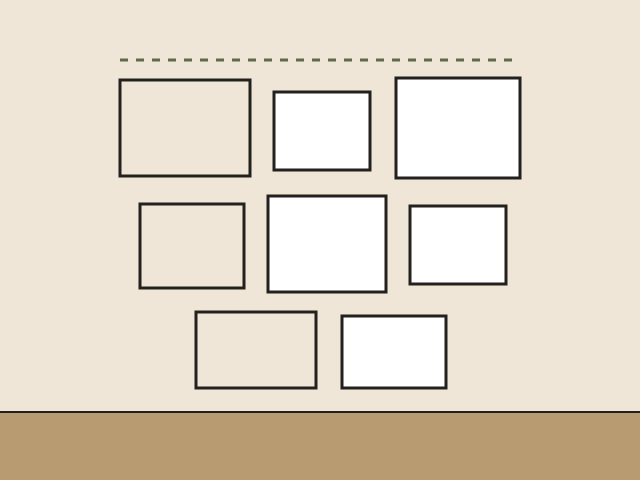
The arrangement in the drawing is loose, but it is not random. Every frame in the top row hangs from one invisible horizontal line, and that line is what makes a mixed set of sizes read as deliberate. You can hang from the tops of the frames or from their centres; hanging from the tops is easier to get right with frames of very different heights.
Keep the gaps consistent. Somewhere between 50 mm and 80 mm between frames suits most walls; below 50 mm the wall looks crowded, above 100 mm the frames stop belonging to each other. Pick one number and hold to it, including at the outside edges where the arrangement meets the rest of the room.
Hang the largest frame first and work outwards. If one frame has to be a little off the line, make it the smallest one, at the edge, where it reads as a deliberate step rather than a mistake.
Sizing frames to real children's paper
Children's artwork does not come in standard sizes. It comes on whatever was on the table, folded once, occasionally with a corner missing. Two practical sizes cover nearly all of it: one frame that takes a full sheet of A3 or 11 by 17 inches, and one that takes A4 or letter. Buy several of each rather than one of everything.
Mount the work rather than filling the frame edge to edge. A wide plain mount makes a piece of paper look considered, and it also forgives a drawing that is not quite square. Cut the mount opening slightly smaller than the paper so the edges are held behind it.
Choose frames that open from the front or the side if you can find them. A wall you have to lift down and unclip every time will be changed twice and then never again.
Keeping it current
The whole reason to build this wall rather than buy prints is that it can change. Set a rhythm: swap two or three frames at the start of each month, keep the rest, and let the child choose at least one of the changes. A wall that someone chose is looked at; a wall that was arranged for them is decoration.
Photograph each piece before it comes down. A flat photograph taken in daylight, with the paper square to the camera, keeps more than a box in the loft ever will and takes up no room at all.
Give the retired work somewhere to go. A single shallow box per child, emptied and reviewed once a year, keeps the wall honest and stops the cupboard filling up.