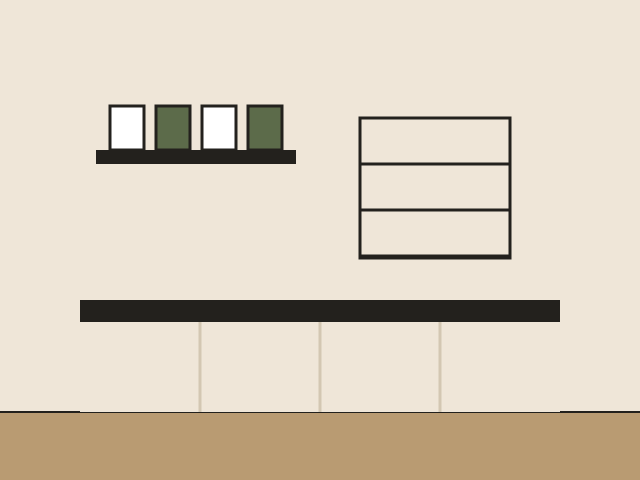
Kitchen · 2,400 mm / 94 in of run · One afternoon
Decide what is allowed to live out
A small kitchen is not short of storage so much as short of decisions. Every object left on the worktop is a decision that was deferred. The first job is to name the handful of things that have genuinely earned a permanent place in the open: the kettle, the things you reach for daily, the board you always use.
Everything else goes behind a door, including the appliances that get used twice a month and the jars bought for one recipe. The test is simple and unsentimental: if it has not been touched in the last two weeks, it does not belong on the worktop.
One shelf, used properly
A single open shelf does more for a short run than a wall of cupboards, because it puts the daily things at eye level without a door in the way. Set it 500 mm to 550 mm above the worktop, which leaves room to work underneath and still keeps the shelf within an easy reach.
Fill it with one family of containers rather than whatever came with the food. Four or six matching jars read as a set and make a small wall look calm; the same six items in six different packets read as clutter, however tidy they are. Keep the shelf at about two-thirds full so there is somewhere for the next thing to go.
Check the bracket rating before you load it. Jars of dry goods are heavier than they look, and a shelf that sags is a job you will do twice.
The rail and the grid
A rail with hooks takes the utensils out of the pot on the worktop and puts them where a hand already goes. Mount it close to the point of use rather than in the most decorative place, which usually means directly above the hob or beside it.
A wall grid does the same job with more flexibility, since the hooks move. Keep it to one panel. Two grids on one short run start to look like a shop fitting rather than a kitchen.
Hang only what you use. The rail is the most visible surface in a small kitchen, and a rail of unused tools is simply clutter mounted at eye level.
Dividing the drawers
Most of the order in a kitchen is invisible. Drawer dividers do more than any wall fitting, because a drawer with compartments stays sorted and a drawer without them reverts within a week however carefully it was packed.
Measure the internal depth, not the front, and cut dividers to that. Give the largest compartment to whatever you reach for most, and keep one compartment deliberately empty for the things that have not found a home yet; it is far better than letting them collect on the worktop.
Review the drawer at the same time each season. It takes ten minutes and it is the single reason a small kitchen either stays workable or slowly stops being one.